
- Specialities
- Laparoscopy
- Urology
- Gynaecology
- Proctology
- Aesthetics
- Vascular
 080-6541-7872
Inguinal-hernia Treatment in Vagamon
Treatment & Care
Effective inguinal hernia treatment in vagamon with minimally invasive methods ensures quicker recovery and significant relief for most patients.

 Call Us: 080-6541-7872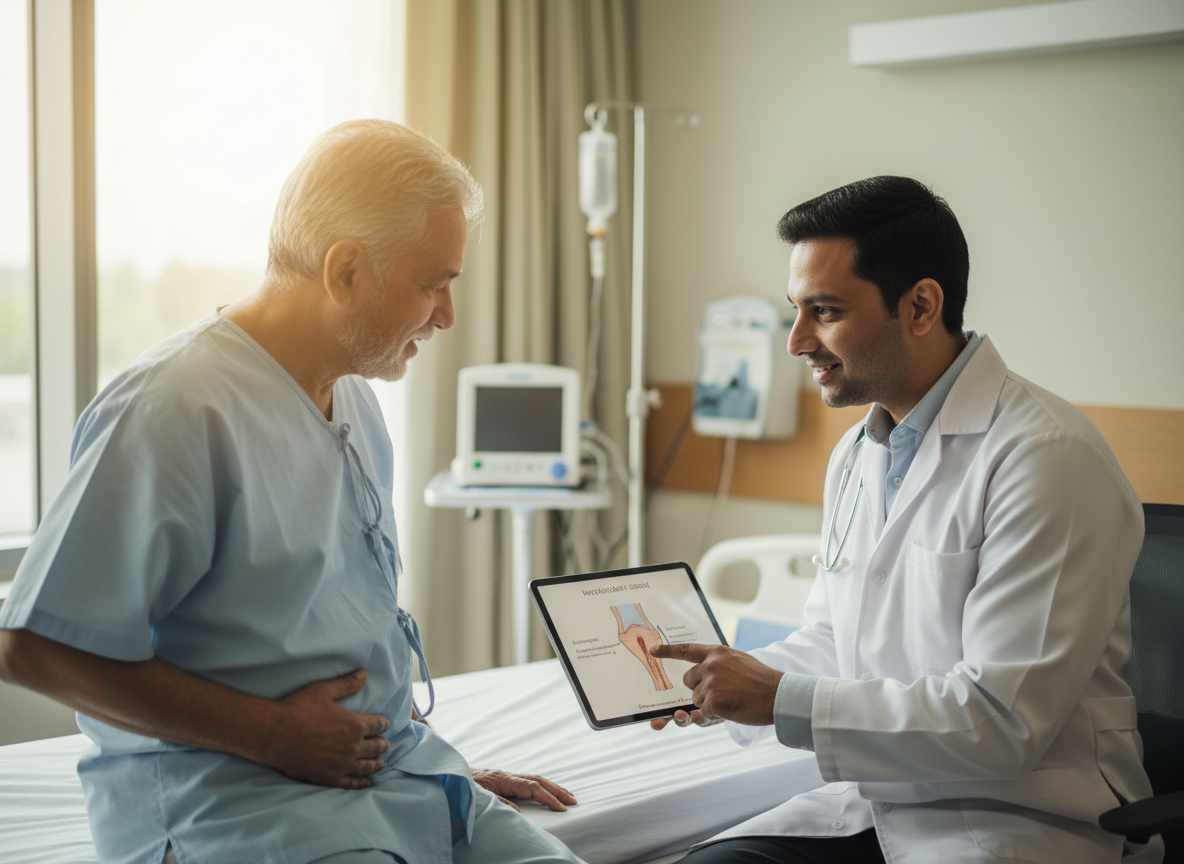
Effective Inguinal Hernia Treatment in vagamon with modern techniques.
An inguinal hernia, characterized by tissue protruding through a weak point in the groin muscles, leads to discomfort and swelling. In vagamon, skilled surgeons provide cutting-edge, minimally invasive laparoscopic repair methods with high success rates. These contemporary techniques entail smaller incisions, less post-operative discomfort, and quicker recovery. Most patients return to their regular activities within a few days, ensuring a dependable and effective solution for lasting relief.
Cautionary Indicators
Identify these initial inguinal hernia symptoms early for prompt medical care

Bulge in groin area
Lump visible near groin or scrotum

Pain in the groin region
Groin area feels aching or burning

Feeling of heaviness
Lower abdomen feels heavy or pressured

Pain during straining
Discomfort when coughing or bending down

Area appears swollen
Swelling in scrotum near the bulge

Feeling nauseous
Nausea or vomiting with sudden groin pain


Warning Signs of Severe Inguinal Hernia
Seek Emergency Care Immediately if:
Seek Emergency Care Immediately if:
 Hernia hardens, becomes non-reducible. Intense pain, nausea, and vomiting occur. Rapid onset of bowel obstruction symptoms. Hernia skin shows red or purple hue. Fever and abrupt increase in hernia pain.
- Hernia hardens, becomes non-reducible.
- Intense pain, nausea, and vomiting occur.
- Rapid onset of bowel obstruction symptoms.
- Hernia skin shows red or purple hue.
- Fever and abrupt increase in hernia pain.
Meet Our Best Inguinal Hernia Specialists

Dr. Dhamodhara Kumar C.B
MBBS, DNB-General Surgery
 Free Consultation
 27 Years Experience
 Kochi, Ernakulam, Kerala 682025
Dr. Sunil Joseph
MBBS, MS, MMIP (Proctology)
Free Consultation 18 Years Experience Kochi, Ernakulam, Kerala 682025
Dr. Nidhin Skariah
MBBS, MS
Free Consultation 15 Years Experience Edappally, Kochi, Kerala 682024 MEDICAL INSIGHT
Factors leading to inguinal hernia development.
Inguinal hernias arise from tissue protruding through abdominal muscle weaknesses, commonly caused by aging, strain, or congenital issues.
Due to inherent anatomical differences in the groin, men have a higher likelihood of developing inguinal hernias.
 Muscle frailty
 Lifting weights
 Persistent cough
 Inherited traits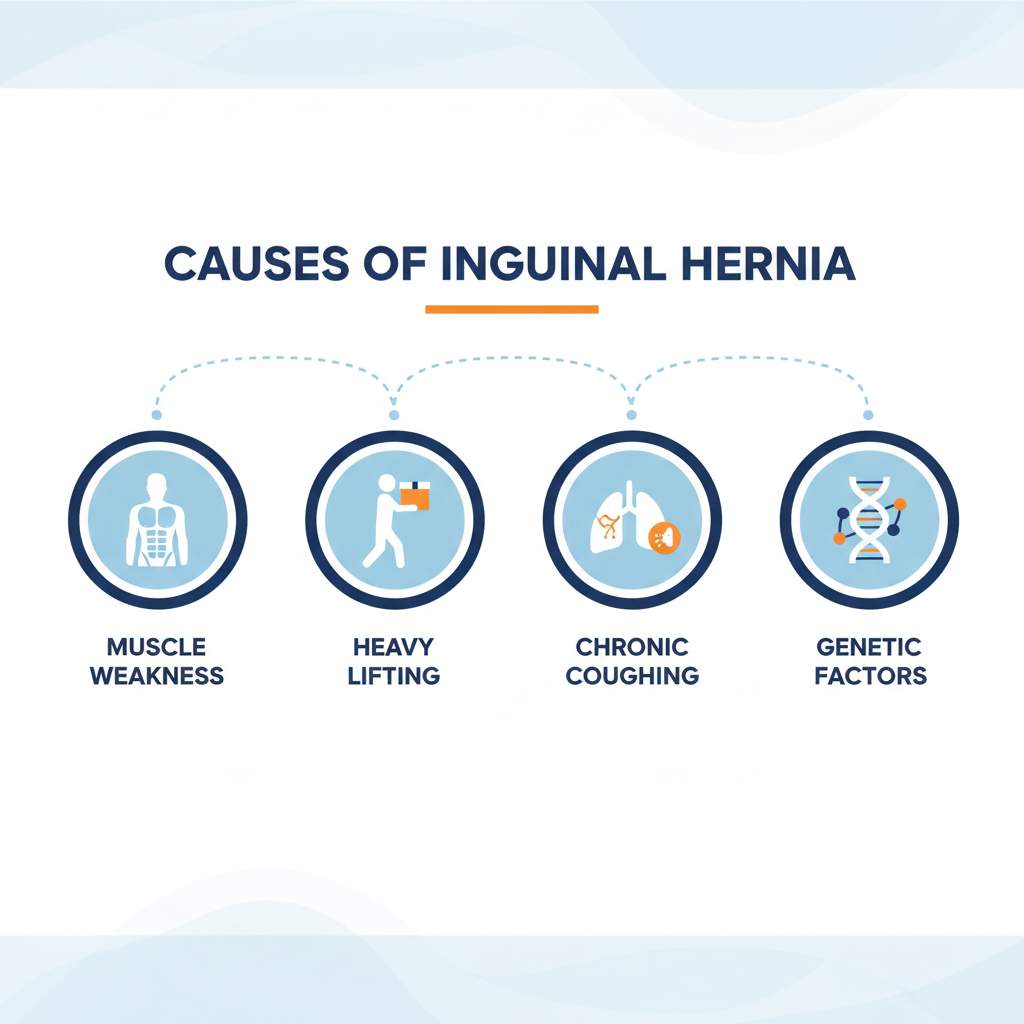
Ready to get the right care?
At-Risk Individuals?
Over time, specific factors may elevate your chances of an inguinal hernia.

Males and elderly individuals are more susceptible.
Anatomical differences make men more prone.

Prolonged coughing or straining increases risk.
High abdominal pressure from coughing or straining.

Past heavy lifting can weaken the abdomen.
Improper heavy lifting weakens the abdominal wall.

Hereditary factors play a significant role.
Genetic factors or prior hernias increase risk.

The Critical Phase
Immediate medical attention is required for sudden severe pain, nausea, or a firm, tender bulge, as these symptoms may signal strangulation.
ALWAYS HOSPITALIZE HIGH-RISK PATIENTS
Potential issues
Serious complications can arise from an untreated inguinal hernia. Early detection and prompt treatment are crucial to minimize these risks.

Hernia entrapment
Severe pain and swelling from trapped intestine necessitate urgent care for bowel obstruction.

Tissue blood cutoff
Cutting off blood to herniated tissue causes death of tissue, a critical surgical need.

Repeat hernia issue
Hernias may recur without proper surgery, especially with heavy lifting or abdominal strain.

 Nearest Clinic
Recovery & Treatment
Guidance on effective surgical options and recovery for inguinal hernia

Operative Fixation
Open or laparoscopic hernioplasty provides high success rates.

Minimally Invasive
Laparoscopic repair ensures smaller incisions and quicker healing.

Post-Surgery Recovery
Most patients return to routine activities within a few days.


Advanced In-Patient Care
We employ cutting-edge laparoscopic methods to minimize tissue harm, lower pain, and facilitate a quicker, more comfortable recovery for most patients.
 CRITICAL ALERT
Refrain from lifting heavy objects and intense activities during initial recovery.
 Avoid heavy lift
 Avoid straining
 Avoid smoking
Consult a professional before any medication.
Urgent medical attention needed for inguinal hernia issues.
If your hernia is trapped or blood flow is blocked, get emergency help.
 Emergency Hotline


Prevention: Your top defense against inguinal hernia.
Adopting simple lifestyle habits can greatly reduce inguinal hernia risk.

Keep a healthy weight
Over time, excess weight can strain abdominal muscles, raising hernia risk.

Lift with care
When lifting heavy items, bend your knees and breathe normally.

Avoid constipation
Daily intake of fibre-rich foods helps minimize straining during bowel movements.

Stop smoking
Chronic cough from smoking repeatedly stresses the groin area.


Your health is our
sole priority.
Need Expert Medical Consultation?
Our network of Inguinal Hernia specialists are available for immediate clinical evaluation and personalized recovery planning.

Frequently Asked Questions
Surgical repair, either open or laparoscopic, is used to treat inguinal hernia. Minimally invasive methods provide smaller incisions, less pain, and quicker recovery for most patients.
The most effective treatment for inguinal hernia is surgery. Mild cases may be monitored, but repair is advised to avoid complications such as strangulation.
 Call Us
 Book Appointment


